

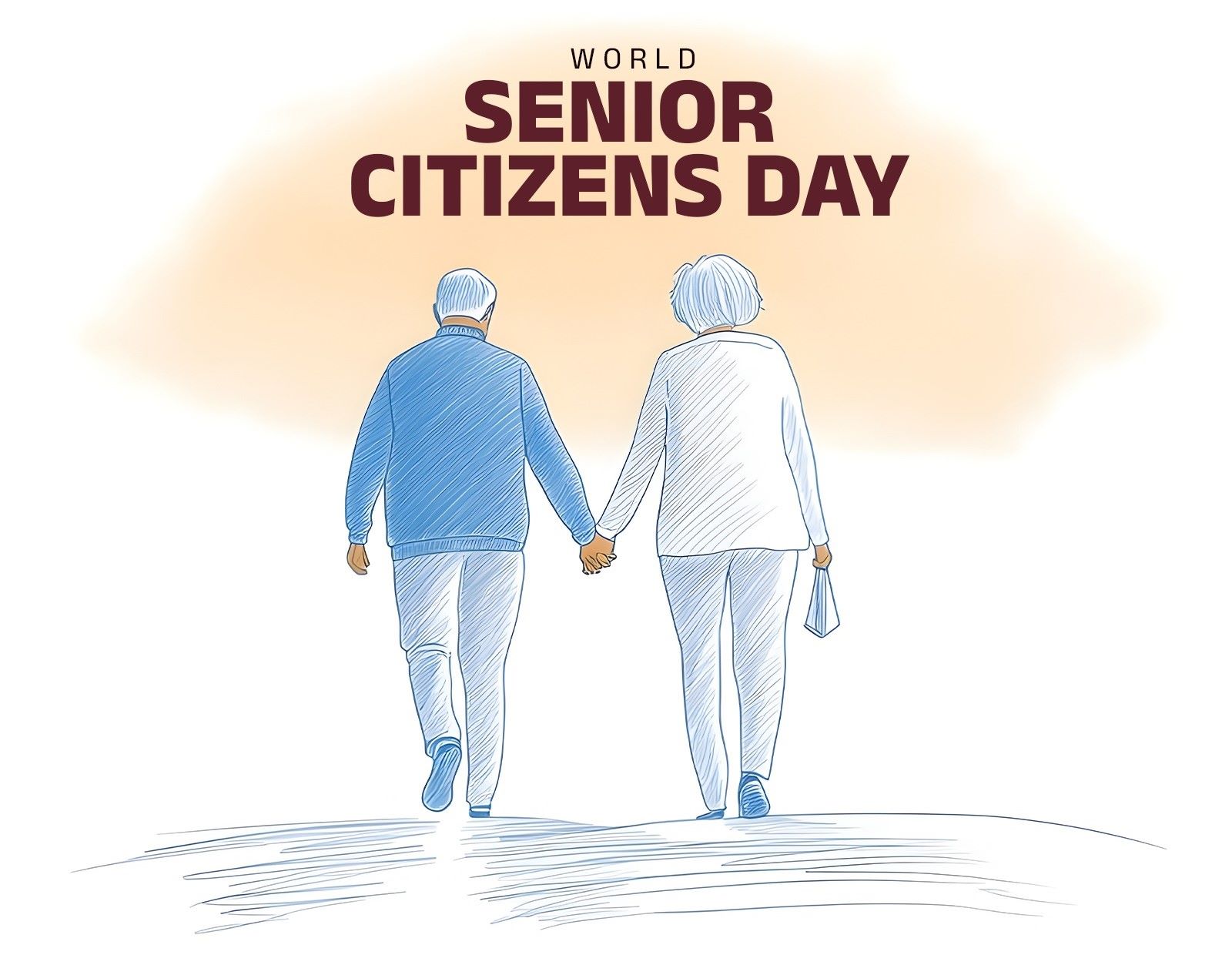
World Senior Citizens Day is commonly observed on August 21 as a day to appreciate older people, recognize their lifelong contributions, and draw attention to issues affecting their health, dignity, security and quality of life. In the United States, National Senior Citizens Day was officially proclaimed by President Ronald Reagan in 1988, with the first observance held on August 21 that year. (Wikipedia)
It is important, however, to distinguish this August 21 observance from the United Nations International Day of Older Persons, which is observed worldwide on October 1. The UN General Assembly designated October 1 as that international observance in 1990 through Resolution 45/106. (United Nations)
🌿 What Is World Senior Citizens Day?
World Senior Citizens Day provides an opportunity to recognize the value of older people in families, communities and society. Growing older is a natural part of life, and senior citizens carry with them decades of experience, knowledge, memories, skills and wisdom.
The day encourages younger generations to look beyond age and recognize older people as active members and contributors of society, rather than seeing them only as people who need care.
It also provides an opportunity to discuss challenges such as:
- Age discrimination
- Loneliness and social isolation
- Elder abuse and neglect
- Access to healthcare
- Financial insecurity
- Retirement and social protection
- Accessibility and mobility
- Digital exclusion
- Housing and community support
- Opportunities for meaningful social participation
The UN similarly emphasizes that older people have important contributions to make to families and communities and that supportive social and physical environments can help them remain active and independent. (United Nations)
📜 History of Senior Citizens Day
The August 21 observance has its roots in the United States.
President Ronald Reagan signed Proclamation 5847 on August 19, 1988, officially establishing August 21 as National Senior Citizens Day. The purpose was to recognize the achievements and contributions of older Americans and encourage greater appreciation for their role in society. (Wikipedia)
The idea of honoring older people, however, is much broader than one national observance.
At the international level, the United Nations has developed a number of important initiatives concerning ageing. The Vienna International Plan of Action on Ageing was adopted at the first World Assembly on Ageing in 1982. In 1991, the UN adopted the United Nations Principles for Older Persons, emphasizing principles such as independence, participation, care, self-fulfillment and dignity. (United Nations)
In 2002, the Second World Assembly on Ageing adopted the Madrid International Plan of Action on Ageing, designed to address the opportunities and challenges created by population ageing and to promote societies for people of all ages. (United Nations)
👵 Why Are Senior Citizens Important?
Senior citizens are an important source of knowledge and experience.
Many older people have spent decades building families, communities, institutions and businesses. They have experienced social changes that younger generations know only through books and stories.
Their contributions may include:
1. Family wisdom
Grandparents and older family members often serve as important sources of advice, encouragement and emotional support.
2. Cultural heritage
Older generations preserve traditions, languages, customs, songs, stories, crafts and local knowledge.
3. Professional experience
Retired teachers, doctors, engineers, farmers, administrators, entrepreneurs, artists and workers possess valuable knowledge that can be passed on to younger generations.
4. Community service
Many senior citizens continue to volunteer in religious organizations, charitable institutions, community groups and social initiatives.
5. Intergenerational learning
Interaction between younger and older generations can benefit both. Young people can share new technology and ideas, while older people can offer experience, perspective and practical wisdom.
The United Nations has repeatedly emphasized the importance of ensuring that older persons can participate fully in society and contribute their knowledge and experience. (The United Nations in India)
❤️ The Importance of Respecting Older People
Respect for older people should not be limited to a single day.
A society can demonstrate respect through simple everyday actions:
- Listening patiently to older people
- Including them in family decisions
- Visiting those who live alone
- Helping them use digital technology
- Assisting with transportation when necessary
- Ensuring safe and accessible surroundings
- Protecting them from financial exploitation
- Respecting their independence
- Giving them opportunities to participate in community life
- Valuing their opinions and experiences
Respect does not mean treating every older person as helpless. True respect means recognizing both their dignity and their independence.
🏥 Health and Healthy Ageing
Health becomes increasingly important as people grow older.
Healthy ageing is not simply the absence of disease. It also involves maintaining the ability to participate in activities that give life meaning.
Regular physical activity appropriate to one’s abilities, nutritious food, adequate sleep, preventive healthcare, social interaction and mental stimulation can all contribute to well-being in later life.
The UN’s Decade of Healthy Ageing 2021–2030 brings governments, civil society, international organizations and other partners together to improve the lives of older people. (United Nations)
Healthcare systems also need to become increasingly responsive to the needs of ageing populations.
🧠 Mental Health and Loneliness
One of the often-overlooked challenges of old age is social isolation.
Retirement, the death of friends or spouses, children moving away, reduced mobility and changing family structures can sometimes leave older people feeling lonely.
A simple visit or phone call can therefore make a meaningful difference.
Families and communities can help by creating opportunities for senior citizens to participate in:
- Social gatherings
- Religious activities
- Cultural programmes
- Reading groups
- Gardening
- Walking groups
- Volunteering
- Educational programmes
- Family celebrations
- Intergenerational activities
Older people should have opportunities not merely to receive support but also to contribute.
🛡️ Protecting Senior Citizens from Abuse
Senior citizens can sometimes become vulnerable to different forms of abuse.
Elder abuse may be:
- Physical
- Emotional
- Psychological
- Sexual
- Financial
- Neglect
Financial exploitation is particularly concerning when an older person depends on others for managing money or accessing digital banking services.
Families and communities have a responsibility to protect older people while respecting their autonomy and dignity.
A compassionate society does not tolerate the exploitation or humiliation of its elderly members.
📱 Senior Citizens and the Digital World
Technology has transformed everyday life.
Banking, healthcare appointments, government services, communication and shopping increasingly involve smartphones and the internet.
For some older people, these technologies can be difficult to navigate.
Digital inclusion therefore matters.
Young people can help senior citizens learn:
- How to use smartphones
- Video calling
- Online banking safely
- Digital government services
- Telemedicine
- Online shopping
- Social media
- Cybersecurity and scam awareness
At the same time, older people should never be made to feel ashamed because they are unfamiliar with new technology.
🌍 An Ageing World
Population ageing is becoming one of the major demographic transformations of the 21st century.
According to the United Nations, the number of people aged 60 and above reached about 1.2 billion in 2025 and is projected to reach approximately 2.1 billion by 2050. The UN also reports that the global population aged 65 and above increased from about 260 million in 1980 to 761 million in 2021. (United Nations)
These changes have implications for:
- Healthcare
- Pension systems
- Housing
- Transportation
- Employment
- Social protection
- Family structures
- Community planning
An ageing population should not be viewed simply as a challenge. Longer lives can also provide opportunities for education, volunteering, employment, creativity, family relationships and community participation. (United Nations)
👨👩👧👦 The Importance of Intergenerational Relationships
A healthy society is one in which generations do not live in isolation from one another.
Children can learn stories and traditions from grandparents. Young adults can benefit from the professional and life experience of older people. Senior citizens can benefit from the energy, technological knowledge and companionship of younger generations.
Intergenerational relationships can therefore create a powerful exchange:
Young people offer energy and new ideas.
Older people offer experience and wisdom.
Together, they strengthen society.
The UN has emphasized the importance of intergenerational dialogue and building inclusive, age-friendly societies. (The United Nations in India)
🇮🇳 Senior Citizens in India
India is also experiencing significant demographic change as people live longer.
Senior citizens play an important role in Indian families and communities. In many families, grandparents continue to participate actively in childcare, household responsibilities, cultural traditions and community life.
At the same time, modernization, migration and changing family structures can create new challenges for elderly people.
India therefore needs continued attention to:
- Accessible healthcare
- Social security
- Elderly-friendly public spaces
- Safe transportation
- Digital literacy
- Financial security
- Protection from abuse
- Community-based support
- Opportunities for active ageing
The dignity and well-being of senior citizens should be regarded as a responsibility shared by families, communities, institutions and government.
🌟 How Can We Celebrate World Senior Citizens Day?
Celebrating this day does not require expensive programmes.
We can:
Visit an elderly person who may be lonely.
Listen to their stories and memories.
Thank them for their contributions to the family and community.
Help them with tasks that have become difficult.
Teach them useful digital skills.
Invite them to family and community activities.
Protect them from exploitation and abuse.
Learn from their experiences.
Celebrate their achievements.
Perhaps the most meaningful celebration is simply giving an older person the feeling that they are seen, heard, valued and loved.
💬 A Message for Younger Generations
Every elderly person was once young.
They dreamed, worked, struggled, celebrated, made sacrifices and built relationships. Many of the opportunities enjoyed by younger generations today were made possible by the efforts of those who came before them.
One day, today’s young people will also grow old.
The way we treat older people today helps shape the kind of society in which we ourselves may live tomorrow.
🌺 World Senior Citizens Day – A Day of Gratitude
World Senior Citizens Day reminds us that ageing is not a failure—it is a natural and valuable stage of human life.
A person’s worth does not diminish with age.
Older people deserve respect without condescension, care without loss of dignity, protection without unnecessary restrictions, and companionship without discrimination.
Their stories are part of our collective history. Their wisdom can guide the present, and their contributions can help shape the future.
“Let us not simply add years to life; let us add dignity, purpose, friendship and meaning to those years.”
World Senior Citizens Day is therefore more than a celebration. It is an invitation to build families and communities where every generation matters and every person can age with dignity, security and purpose.
📌 Important Facts at a Glance
| Fact | Details |
|---|---|
| Observance | National Senior Citizens Day |
| Date | August 21 |
| Origin | United States |
| Officially proclaimed | 1988 |
| Proclaimed by | President Ronald Reagan |
| Proclamation | No. 5847 |
| Purpose | To recognize and appreciate senior citizens and their contributions |
| UN International observance | International Day of Older Persons |
| UN date | October 1 |
| UN designation | 1990 |
| UN Resolution | A/RES/45/106 |
The distinction between the August 21 National Senior Citizens Day and the October 1 UN International Day of Older Persons is important when publishing this as an international-awareness article. (United Nations)
Leave a Reply