

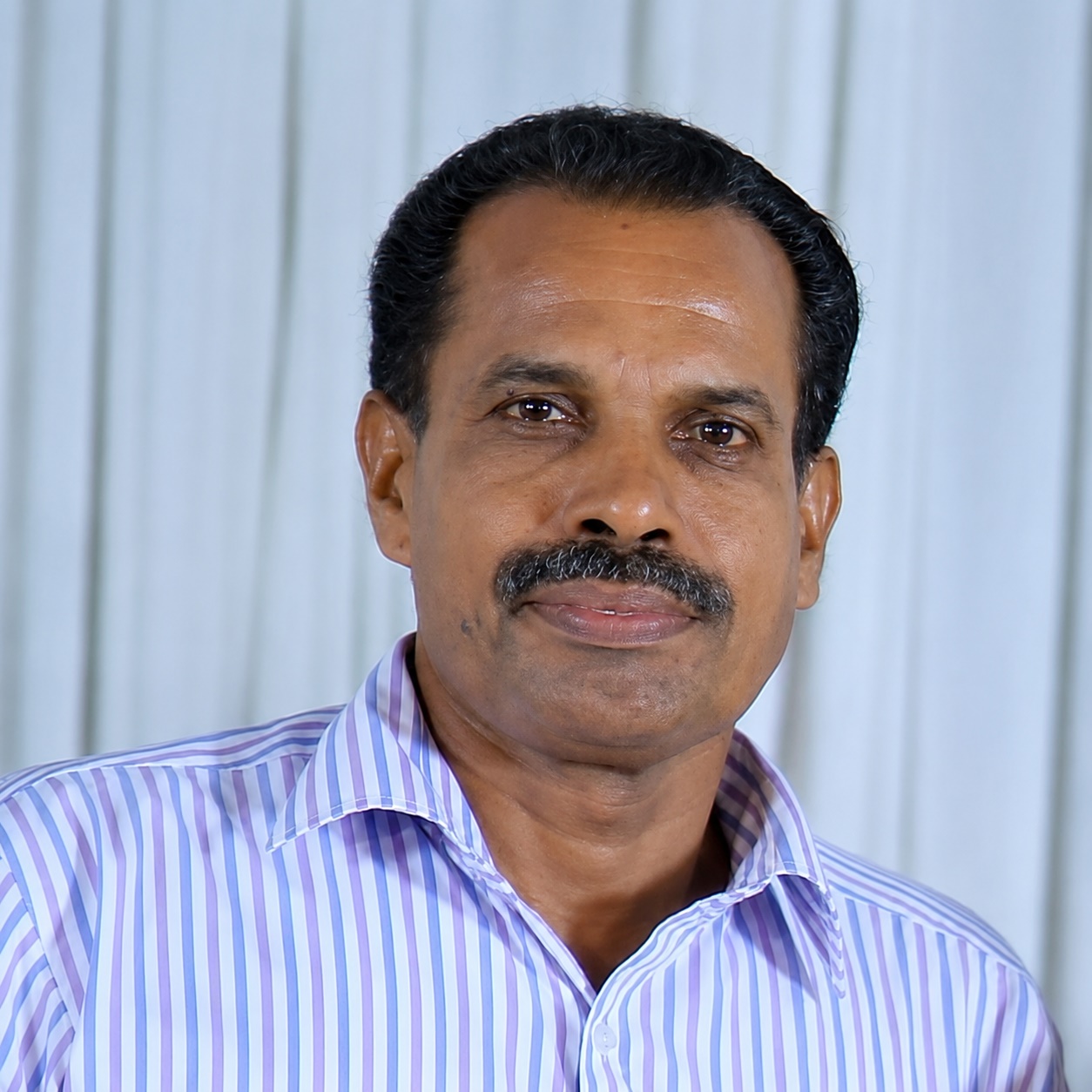
Yogacharya Paul Madathikandam is a distinguished yoga teacher, educator, Ayurvedic therapist, and mentor whose life reflects a remarkable synthesis of academic learning, disciplined yogic practice, traditional knowledge, and dedicated service to society. For several decades, he has devoted himself to teaching, practising, and sharing the principles of yoga and holistic well-being, inspiring people to cultivate healthier bodies, calmer minds, and more purposeful lives.
His journey—from a small village in Kerala to the world of higher education, yoga, Ayurveda, and teaching—is a story of lifelong learning, perseverance, and service.
Early Life and Family
Paul Madathikandam was born on January 13, 1957, at Kalayanthani, a picturesque village near Thodupuzha in present-day Idukki district, Kerala. He was the second son of M. V. Antony Madathikandathil and Mary Antony Madathikandathil, who brought up their children with strong values of faith, discipline, hard work, learning, and service.
Growing up in the peaceful surroundings of rural Kerala, Paul developed an early appreciation for nature and a strong inclination towards learning and self-discipline. These qualities would later become important foundations of his academic career, yogic practice, and service to others.
Academic Journey
Paul began his formal education at Infant Jesus Primary School, Alakode, where he received his elementary education. He subsequently studied at St. George’s High School, Kalayanthani, developing a particular interest in literature, language, and intellectual pursuits.
His desire for higher education eventually took him to Calcutta (Kolkata), a major centre of education, culture, and intellectual life in India. There he pursued his higher studies, completing his Pre-Degree, Bachelor’s Degree, and later a Master of Arts (M.A.) in English Literature.
His academic background in English Literature broadened his understanding of language, culture, philosophy, and human experience. The discipline of literary study also strengthened his ability to communicate ideas effectively—an ability that would prove valuable throughout his career as a teacher and mentor.
The Call of Yoga
Alongside his academic interests, Paul developed a deep and lasting interest in yoga. What began as an interest in physical health and personal well-being gradually developed into a profound commitment to the study and practice of yoga.
In 1997, he completed the Yoga Teacher’s Training Course (Yogasiromani) at the Sivananda Ashram, Neyyar Dam, in Kerala. Determined to deepen his understanding and practice, he subsequently undertook the Yoga Sadhana Intensive Course and, in 1998, completed the Advanced Yoga Teacher’s Training Course (Yogacharya) at the same institution.
These years of intensive study and practice marked an important turning point in his life. Since then, he has continued to practise and teach yoga, making it an integral part of both his personal life and his service to others.
For Paul, yoga is much more than a collection of physical postures. He regards it as a comprehensive discipline capable of bringing greater harmony to the body, mind, and inner life.
Yogacharya and Teacher
Through decades of dedicated practice and teaching, Paul came to be known as Yogacharya, reflecting his advanced training and commitment to sharing yogic knowledge.
His approach to yoga emphasizes the interconnectedness of physical health, mental balance, disciplined living, and inner awareness. His teaching encourages students not simply to perform yoga postures but to understand the deeper principles behind the practice and incorporate them into everyday life.
Among the principal areas emphasized in his teaching are:
- Physical health, strength, flexibility, and vitality
- Proper breathing and breath awareness
- Relaxation and stress management
- Mental concentration and emotional balance
- Self-discipline and healthy habits
- Awareness of the body and mind
- Inner peace and spiritual development
- The integration of yogic principles into daily life
His teaching is rooted in the conviction that lasting well-being requires balance. Physical fitness, in his view, is only one dimension of a healthy and meaningful life.
A Connection with Traditional Ayurveda
Another important dimension of Paul Madathikandam’s life is his connection with traditional Ayurvedic knowledge.
He learned traditional Ayurvedic principles and practices from his grandfather, Mr. Varkey Madathikandam, who was a well-known Ayurvedic physician of his time. This early exposure enabled Paul to develop an appreciation for India’s traditional approach to health and healing.
He subsequently worked as an Ayurvedic therapist for several years, gaining practical experience in traditional therapeutic approaches.
His work has included assisting people with a variety of musculoskeletal complaints and physical difficulties, including back pain, sciatica, slipped disc, disc prolapse, scoliosis, shoulder problems, knee pain, tennis elbow, and sprains. His approach draws upon his knowledge of traditional therapeutic practices and his long experience with yoga and physical well-being.
He is also a certified member of the traditional Ayurvedic physicians’ community in Idukki district.
His combined interest in yoga and traditional Ayurveda reflects his broader understanding of health as a holistic process involving physical, mental, and lifestyle factors.
Work as an English Teacher
Paul’s contribution to education extends beyond yoga and Ayurveda. With his academic background in English Literature, he has also worked as a spoken English teacher.
For several years, he taught spoken English at Upasana, Thodupuzha, as well as at other educational institutions. Through language teaching, he helped students and learners develop greater confidence in communication and improve their practical command of English.
This combination of academic knowledge, teaching ability, and personal interaction has enabled him to connect with people from different backgrounds and age groups.
Yoga in Education
One of the notable aspects of Paul’s career has been his contribution to the introduction and promotion of yoga within educational environments.
His association with Newman College, Thodupuzha, where he served as a Yoga Master, reflects his commitment to bringing the benefits of yoga to students and the wider academic community.
Educational institutions provide an especially meaningful setting for yoga. Students face academic pressure, competition, uncertainty, and the challenges of rapidly changing social environments. Regular yoga practice can encourage physical fitness, concentration, relaxation, self-awareness, and disciplined habits.
Through his teaching, Paul has sought to make yoga accessible and meaningful to students, educators, professionals, and others interested in improving their quality of life.
Philosophy of Life and Teaching
At the heart of Yogacharya Paul Madathikandam’s philosophy is the belief that yoga is a way of life rather than merely a physical exercise system.
He approaches yoga as a discipline that can influence the whole person. Physical postures may strengthen and make the body more flexible, but the deeper purpose of yoga lies in developing awareness, self-control, balance, and inner harmony.
His teaching reflects several important principles:
Health is holistic.
True well-being involves more than the absence of physical illness. It includes physical vitality, emotional stability, mental clarity, healthy habits, and a sense of inner balance.
Discipline creates freedom.
Regular practice requires commitment and self-discipline. Over time, this discipline can become a source of strength and freedom rather than a restriction.
Knowledge should be shared.
Education becomes more meaningful when knowledge is placed at the service of others. Paul’s career demonstrates this principle through his work as a teacher, yoga instructor, and therapist.
Yoga belongs to everyday life.
The benefits of yoga should not remain confined to the yoga mat. Awareness, patience, moderation, concentration, and calmness can become qualities of everyday living.


A Life of Lifelong Learning
A striking feature of Paul Madathikandam’s life is his commitment to continuous learning. His academic studies in English Literature, advanced training in yoga, experience in Ayurveda, and years of teaching demonstrate a willingness to explore different fields of knowledge.
Rather than treating education as something that ends with a university degree, he has continued to learn through practice, observation, teaching, and interaction with people.
His life therefore offers an example of lifelong education—the idea that learning continues throughout one’s life and can take place through formal study as well as practical experience.
Service Through Knowledge
For Yogacharya Paul Madathikandam, knowledge has always been closely connected with service. Whether teaching English, guiding students in yoga, practising traditional therapeutic methods, or mentoring individuals in healthy living, his work has centred on helping others.
His contribution is particularly significant because it brings together several complementary areas: education, physical well-being, traditional knowledge, yoga, and personal development.
Through these fields, he has encouraged people to become more aware of their bodies, minds, habits, and potential.
Legacy and Continuing Influence
The story of Yogacharya Paul Madathikandam is ultimately a story of dedication. From his childhood in Kalayanthani to his higher education in Kolkata and his subsequent journey through yoga, Ayurveda, and teaching, each stage of his life has contributed to the person and teacher he has become.
His legacy lies not simply in the courses he has completed or the institutions with which he has been associated, but in the knowledge and values he has shared with others.
His life demonstrates that education can take many forms and that physical well-being, intellectual development, and inner growth can complement one another. His decades of commitment to yoga have allowed him to guide people towards greater awareness of their physical and mental well-being, while his academic and teaching experience has enabled him to communicate these ideas with clarity and compassion.
Conclusion
Yogacharya Paul Madathikandam represents a distinctive blend of scholarship, traditional knowledge, yogic discipline, and service. His life has been shaped by a continuous search for knowledge and by a desire to place that knowledge at the service of others.
From his early education in Kerala and his academic years in Kolkata to his advanced training at Sivananda Ashram and his subsequent decades of teaching and practice, his journey illustrates the value of perseverance, discipline, and lifelong learning.
His work as a yoga teacher, educator, Ayurvedic therapist, and mentor reflects a holistic vision of human excellence—one that recognizes the importance of a healthy body, a balanced mind, a disciplined life, and a deeper awareness of one’s inner potential.
The life of Yogacharya Paul Madathikandam is therefore more than a personal biography. It is an example of how education, yoga, traditional wisdom, and service can come together to enrich individual lives and contribute to the well-being of society.


Leave a Reply