

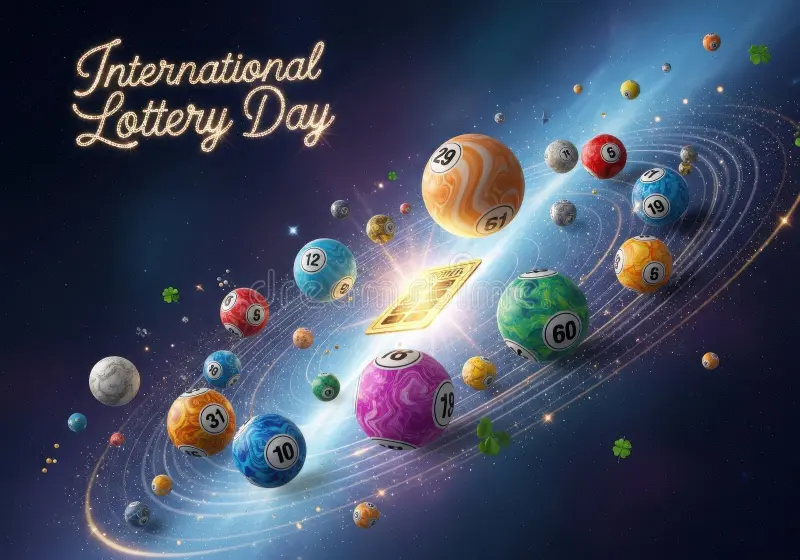
International Lottery Day is observed on August 27 as a day associated with lotteries, their long history, cultural influence, and the dreams of people who hope that a small ticket might bring a life-changing prize.
Lotteries are among the world’s oldest forms of organized games of chance. Over centuries, they have been used not only for entertainment and prize distribution but also to raise money for public projects, charitable causes, education, infrastructure and government activities.
Note: Unlike a United Nations observance, International Lottery Day is generally treated as an informal or promotional observance rather than a universally recognized official international holiday. Its exact origin and historical basis are not consistently documented.
🎫 What Is a Lottery?
A lottery is a game of chance in which participants purchase entries, select or receive numbers or symbols, and prizes are awarded according to a predetermined drawing or random selection.
A basic lottery usually involves:
- Purchasing a ticket or entry.
- Selecting or receiving numbers.
- Waiting for the official draw.
- Comparing the ticket with the winning combination.
- Claiming a prize if the ticket qualifies.
Modern lotteries range from small community raffles to enormous national and international jackpot games.
🏺 The Ancient History of Lotteries
The idea behind lotteries is remarkably old.
Ancient societies used forms of random selection for entertainment, distribution and decision-making.
🇨🇳 Ancient China
One of the most frequently cited early examples comes from ancient China.
During the Han dynasty, games resembling lotteries are believed to have been used, with proceeds associated in historical accounts with government purposes.
The famous Keno-type games are sometimes connected with these early Chinese practices.
🏛️ Lotteries in Ancient Rome
Lotteries also appeared in the Roman world.
Roman leaders sometimes distributed prizes through random drawings during festivals and celebrations.
According to historical accounts, Emperor Augustus organized lotteries in which guests could receive prizes.
These early forms were different from today’s commercial lotteries, but they established an enduring connection between random drawings and prizes.
🇮🇹 The Development of Modern Lotteries in Europe
Organized lotteries became increasingly common in Europe during the Middle Ages and Renaissance.
Italian cities were particularly important in the development of modern lottery systems.
The word “lottery” is generally associated with the Italian lotto, referring to a portion, share or lottery game.
By the Renaissance period, lotteries were being organized to raise money for public purposes.
🏰 Lotteries and Public Projects
One important historical feature of lotteries is their use for public financing.
Governments and municipalities have historically used lottery proceeds to support projects such as:
- Roads
- Bridges
- Schools
- Public buildings
- Hospitals
- Universities
- Charitable institutions
- Cultural projects
This gave lotteries an important role beyond entertainment.
🇬🇧 Lotteries in Britain
Lotteries became increasingly established in England during the 17th century.
The English State Lottery became a significant source of government revenue.
The Great Lottery of 1694, for example, helped the English government raise money during a period of expensive military conflicts.
Later, lotteries were used for various public purposes.
🇺🇸 Lotteries in American History
Lotteries played a significant role in the early history of the United States.
Before the development of modern taxation systems, lotteries were sometimes used to raise money for public projects.
Historical accounts associate lotteries with financing or supporting institutions and projects including:
- Roads
- Canals
- Bridges
- Churches
- Schools
- Colleges
Several early American universities have historical connections to lottery fundraising.
🎓 Lotteries and Education
One interesting historical connection is between lotteries and education.
In earlier centuries, educational institutions sometimes relied on lottery proceeds to help finance construction and development.
Today, some government lotteries continue to dedicate portions of their proceeds to:
- Education
- Scholarships
- School construction
- Youth programs
However, the exact distribution of lottery revenue varies considerably from one jurisdiction to another.
💰 How Modern Lotteries Work
Modern lotteries use sophisticated systems designed to make drawings fair and auditable.
Depending on the game, numbers may be selected through:
Mechanical Ball Machines
Numbered balls are physically mixed and randomly selected.
Random Number Generators
Computerized systems generate numbers using approved randomization technology.
Scratch Cards
Players purchase tickets containing concealed information and reveal the result immediately.
Online Lottery Games
In jurisdictions where they are legal, lottery products can also be purchased through authorized digital platforms.
🎯 Why Do People Play Lotteries?
There are many reasons.
💭 Hope
A lottery ticket represents the possibility—however small—of receiving a very large prize.
🎉 Entertainment
For some people, buying an occasional ticket is simply a form of entertainment.
🌟 Dreams of a Better Life
People may imagine using winnings to:
- Buy a home
- Pay debts
- Help family
- Travel
- Start a business
- Support charitable causes
- Save for retirement
🧠 The Psychology of “What If?”
Lotteries are strongly connected with imagination.
A person may think:
“What would I do if I won?”
That simple question is part of the appeal of jackpot games.
📊 Understanding Lottery Odds
One of the most important things to understand about lotteries is that winning a major jackpot is usually extremely unlikely.
For a lottery requiring players to select a specific combination from a large number of possibilities, the number of possible combinations can become enormous.
For example, if a game requires choosing 6 numbers from 49, the number of possible combinations is:
13,983,816
That means a single combination has a jackpot probability of approximately:
1 in 13.98 million
The exact odds differ dramatically from one lottery to another.
🧮 Lottery Mathematics
Lotteries provide fascinating examples of probability and statistics.
If a lottery asks a player to select 6 numbers from 49, the number of possible combinations is calculated using the combination formula:
C(49,6) = 49! / (6! × 43!)
The result is:
13,983,816 combinations
Only one combination wins the jackpot in a standard six-number draw of this type.
This demonstrates why a lottery can generate enormous jackpots while individual winning probabilities remain extremely small.
⚠️ Responsible Lottery Participation
International Lottery Day should also be an opportunity to discuss responsible gambling.
A lottery should never be treated as a guaranteed way to make money.
Important principles include:
- Spend only what you can afford to lose.
- Never use money needed for food, housing or essential expenses.
- Do not borrow money to buy lottery tickets.
- Do not chase losses.
- Understand the actual odds.
- Treat lottery participation as entertainment rather than investment.
- Follow the legal age and rules applicable in your location.
For people who find gambling difficult to control, avoiding lottery products altogether is the safest choice.
🚫 Lottery Scams
The popularity of lotteries has also created opportunities for fraud.
Common scams include messages claiming:
“Congratulations! You have won the lottery!”
even though the recipient never purchased a ticket.
Scammers may then request:
- Processing fees
- Taxes
- Bank information
- Identification documents
- Gift cards
- Cryptocurrency payments
Remember:
You cannot normally win a legitimate lottery that you never entered.
Never send money or sensitive financial information simply because someone claims that you have won a prize.
Always verify lottery information through the lottery organization’s official website or authorized contact channels.
🌍 Lotteries Around the World
Many countries operate government-authorized or regulated lotteries.
Examples include:
🇬🇧 United Kingdom
The National Lottery is one of Britain’s best-known lottery systems.
🇺🇸 United States
Various state lotteries operate alongside multi-state games such as Powerball and Mega Millions.
🇮🇳 India
Lotteries operate under a legal framework that allows states to regulate certain lottery activities subject to national law.
🇪🇸 Spain
Spain has a long lottery tradition, including the famous Christmas Lottery, Lotería de Navidad.
🇫🇷 France
France has a long history of organized lottery games, now operated through its national lottery system.
🇦🇺 Australia
Australia has several lottery games operated under state and territory arrangements.
🇮🇳 Lotteries in India
Lotteries have a particularly interesting history in India.
Under the Lotteries (Regulation) Act, 1998, state governments can organize lotteries subject to specified conditions.
Different Indian states have adopted different approaches to lotteries.
Kerala is particularly well known for its state lottery program, which has operated since 1967.
The Kerala State Lotteries program includes various weekly lotteries and larger bumper draws.
Lottery proceeds have also been associated with government revenue and welfare-oriented activities.
🌴 Kerala State Lotteries
Kerala’s lottery system has become a distinctive part of the state’s social and economic landscape.
The Kerala State Lotteries Department organizes different lottery schemes throughout the year.
Among the best-known are weekly lotteries and major bumper draws connected with festivals and special occasions.
The Kerala lottery model has often attracted attention because of its large network of authorized sellers and its role in generating government revenue.
However, participation should always be legal, age-appropriate and financially responsible.
🎟️ Lottery Day Activities
International Lottery Day can be used as an opportunity for education rather than simply encouraging ticket purchases.
Schools
Teachers can use lotteries to teach:
- Probability
- Statistics
- Mathematics
- Financial literacy
- Risk assessment
Families
Parents can discuss the difference between:
saving money, investing money and gambling money.
Communities
Community organizations can use the day to promote awareness about:
- Gambling risks
- Lottery scams
- Financial planning
- Responsible spending
🧠 Lottery vs. Investment
A crucial distinction is:
Investment
An investment is generally made with the expectation of earning a return through an underlying asset, business or financial instrument.
Lottery
A lottery ticket is purchased for a chance to receive a prize determined primarily by chance.
Therefore:
A lottery ticket should not be regarded as an investment or financial plan.
🌟 Interesting Facts About Lotteries
1. Lotteries are centuries old
Forms of lottery and random prize distribution existed long before modern national lotteries.
2. Governments have used lotteries for public revenue
Historically, lottery proceeds have helped finance public projects.
3. Probability makes jackpots difficult to win
The larger the number of possible combinations, the lower the probability of winning a particular combination.
4. Lotteries exist in many forms
They include traditional draws, scratch cards, raffles and digital games.
5. Lottery systems vary by country
Different countries have different laws, taxation systems and regulations.
6. Lottery scams are common
Fake prize notifications are a major form of online and telephone fraud.
7. Responsible participation matters
Lottery games should never interfere with essential financial responsibilities.
💬 A Thought for International Lottery Day
“A lottery ticket can buy a chance, but it cannot buy a guarantee. The smartest prize is financial security built through wise decisions.”
International Lottery Day can therefore be more than a celebration of jackpots and lucky numbers. It can be an opportunity to learn about probability, financial responsibility, history, public revenue and the psychology of chance.
🎉 International Lottery Day — Quick Facts
| Category | Information |
|---|---|
| Observance | International Lottery Day |
| Date commonly observed | August 27 |
| Type | Informal/unofficial observance |
| Main theme | Lotteries, chance, history and entertainment |
| Key subjects | Probability, gambling, finance and public revenue |
| Ancient associations | China and Rome |
| European development | Renaissance-era Italy and later Europe |
| Modern lottery systems | Government-authorized and regulated lotteries in many countries |
| Important caution | Gambling involves financial risk |
🎟️ Conclusion
International Lottery Day offers a fascinating opportunity to explore one of humanity’s oldest organized games of chance.
From ancient random drawings to modern computerized lottery systems, lotteries have evolved dramatically. They have influenced government finance, public projects, entertainment, mathematics and popular culture.
But perhaps the most important lesson of the day is this:
Dream responsibly. Play responsibly. Spend responsibly.
Winning a lottery may change someone’s life—but good financial habits can change a person’s life without depending on luck.
Happy International Lottery Day! 🎟️🍀
Leave a Reply