

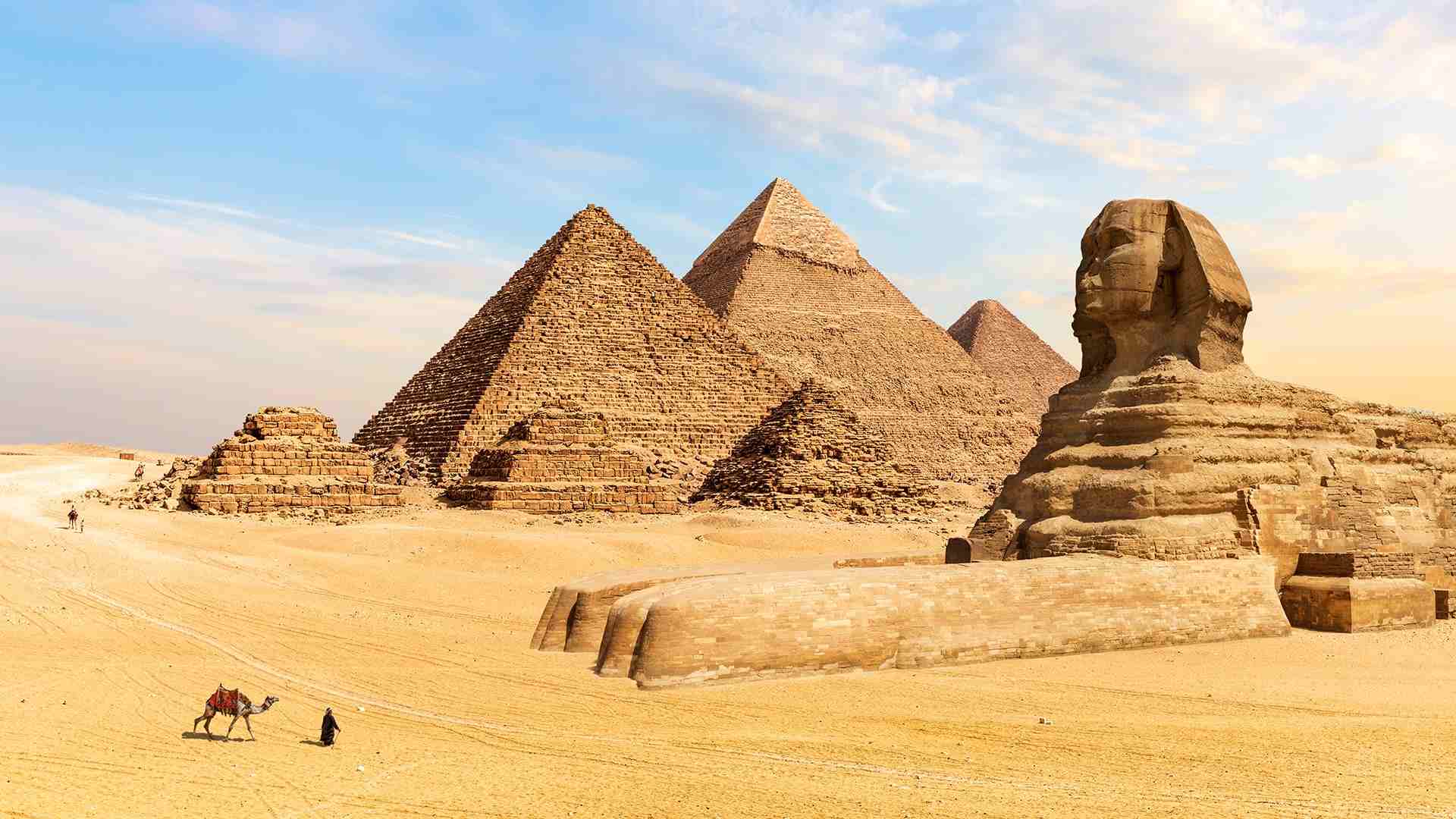
Ancient Egypt is one of the world’s most fascinating civilizations, famous for its pyramids, pharaohs, mummies, hieroglyphics, temples, and contributions to mathematics, medicine, astronomy, and architecture. This collection of 120 general knowledge questions is ideal for students, quiz competitions, history enthusiasts, and competitive exam preparation.
Section 1: Ancient Egyptian Civilization
- Which river was the lifeline of ancient Egyptian civilization?
- On which continent was ancient Egypt located?
- What was the capital of ancient Egypt during much of the Old Kingdom?
- What was the title given to the rulers of ancient Egypt?
- Which desert lies to the west of the Nile River in Egypt?
- What was the ancient Egyptian writing system called?
- Which material made from papyrus plants was used for writing?
- What was the fertile land along the Nile called by ancient Egyptians?
- What was the ancient Egyptian language primarily written in during the pharaonic period?
- Around what year did the unification of Upper and Lower Egypt traditionally take place?
- Who is traditionally credited with unifying Upper and Lower Egypt?
- What symbol represented the unification of Upper and Lower Egypt?
- What was the main occupation of most ancient Egyptians?
- What were the two major regions of ancient Egypt called?
- What natural event made the Nile Valley suitable for agriculture?
Section 2: Pyramids and Monuments
- Which Egyptian pharaoh built the Great Pyramid of Giza?
- Where are the famous Pyramids of Giza located?
- Which pyramid is the largest of the three major pyramids at Giza?
- Who commissioned the Great Sphinx of Giza, according to the most widely accepted interpretation?
- What is the Great Sphinx famous for?
- Which pharaoh is associated with the Step Pyramid of Djoser?
- Who designed the Step Pyramid of Djoser, according to ancient tradition?
- In which ancient Egyptian city was the Step Pyramid built?
- What was the primary purpose of the Egyptian pyramids?
- Which pharaoh built the second-largest pyramid at Giza?
- Which pharaoh built the third major pyramid at Giza?
- What stone was commonly used for the outer casing of the Great Pyramid?
- What is the approximate original height of the Great Pyramid of Giza?
- Which ancient wonder of the world still survives substantially today?
- What is the name of the royal burial ground near Luxor famous for its tombs?
Section 3: Pharaohs and Famous Rulers
- Who was Tutankhamun?
- Which archaeologist discovered Tutankhamun’s nearly intact tomb in 1922?
- Which pharaoh is associated with the famous gold funerary mask?
- Who was Cleopatra VII?
- Which Roman leader formed a political and personal alliance with Cleopatra VII?
- Which pharaoh is famous for the Battle of Kadesh against the Hittites?
- Who was Hatshepsut?
- Which female pharaoh expanded Egyptian trade and commissioned a famous mortuary temple at Deir el-Bahri?
- Which pharaoh attempted to promote the worship of Aten above other Egyptian gods?
- What name did Amenhotep IV adopt?
- Who was Ramses II, also known as Ramses the Great?
- Which pharaoh is associated with the Abu Simbel temples?
- Who was Narmer?
- Which pharaoh is associated with the restoration of traditional Egyptian religious practices after Akhenaten?
- What was the principal role of a pharaoh in ancient Egyptian society?
Section 4: Egyptian Gods and Religion
- Who was Ra in ancient Egyptian religion?
- Which god was associated with mummification and the afterlife?
- Who was Osiris?
- Which goddess was the wife of Osiris and mother of Horus?
- Which Egyptian god was commonly depicted with the head of a falcon?
- Who was Anubis?
- Which god was associated with wisdom, writing, and knowledge?
- Who was the ancient Egyptian god of chaos and disorder who killed Osiris in the myth?
- Which goddess was associated with magic, motherhood, and healing?
- What was the Egyptian concept of truth, balance, and cosmic order called?
- What was the name of the ancient Egyptian sun god?
- Which goddess was often depicted as a lioness and associated with war and healing?
- What was the purpose of offerings in ancient Egyptian religious practices?
- What did ancient Egyptians believe happened to a person’s heart during the judgment of the dead?
- What was the name of the collection of funerary spells known as the Book of the Dead?
Section 5: Mummies and Burial Customs
- What is mummification?
- Why did ancient Egyptians preserve the bodies of the dead?
- What substance was commonly used to dry the body during mummification?
- What were canopic jars used for?
- How many traditional canopic jars were generally used to store preserved organs?
- Which organ was commonly left inside the body during mummification because of its religious importance?
- What was placed over the face of some Egyptian mummies?
- What were sarcophagi?
- Why were amulets placed among mummy wrappings?
- What was the purpose of funerary goods placed in tombs?
- What was the name of the ancient Egyptian text containing spells to assist the dead in the afterlife?
- Which Egyptian god was associated with weighing the heart of the deceased?
- What creature represented the devourer of the hearts of those judged unworthy in Egyptian mythology?
- What was the Valley of the Kings used for?
- Were all ancient Egyptians mummified in the same elaborate way?
Section 6: Hieroglyphics, Writing, and Education
- What are Egyptian hieroglyphics?
- Which stone helped scholars decipher Egyptian hieroglyphics?
- In which year was the Rosetta Stone discovered?
- Which French scholar is credited with deciphering Egyptian hieroglyphics in the 1820s?
- What three scripts appear on the Rosetta Stone?
- What was papyrus made from?
- Who were scribes in ancient Egypt?
- Why were scribes important to the Egyptian government?
- What was demotic script used for?
- What was hieratic script primarily used for?
Section 7: Daily Life and Society
- What were the main foods eaten by ordinary ancient Egyptians?
- What grain was commonly used to make bread and beer in ancient Egypt?
- What was the main source of water for ancient Egyptian farming?
- What clothing material was commonly used in ancient Egypt?
- What were shadufs used for?
- What role did craftsmen play in ancient Egyptian society?
- What animals were commonly used to assist with farming and transportation?
- What was the role of priests in ancient Egyptian temples?
- What types of games and toys did ancient Egyptian children enjoy?
- Could women in ancient Egypt own property under the law?
Section 8: Science, Mathematics, and Technology
- Why was geometry important in ancient Egypt?
- What type of calendar did ancient Egyptians develop?
- Approximately how many days were in the civil calendar of ancient Egypt?
- How many seasons were traditionally recognized in the ancient Egyptian agricultural calendar?
- What were the three traditional agricultural seasons called?
- What was the purpose of Egyptian medicine?
- What ancient Egyptian mathematical document contains problems involving arithmetic and geometry?
- What was the Rhind Mathematical Papyrus named after?
- What technology helped ancient Egyptians move heavy stone blocks?
- How did the annual Nile inundation contribute to Egyptian agriculture?
Section 9: Temples, Cities, and Trade
- Which ancient Egyptian city became a major religious center dedicated to Amun?
- Which famous temple complex is located at Karnak?
- Which Egyptian city is associated with the temples of Luxor and Karnak?
- Where is the famous rock-cut temple complex of Abu Simbel located?
- Which ancient Egyptian port and trading center was associated with expeditions to the land of Punt?
- What was the land of Punt known for providing to Egypt?
- Which ancient city served as a major center of learning and scholarship during the Ptolemaic period?
- What was the famous Library of Alexandria intended to collect?
- Which sea lies north of Egypt?
- Which canal, completed in the nineteenth century, connects the Mediterranean Sea with the Red Sea?
Section 10: Decline and Legacy of Ancient Egypt
- Which empire conquered Egypt in 525 BCE under Cambyses II?
- Who conquered Egypt in 332 BCE and began the Macedonian Greek period?
- Which dynasty ruled Egypt after the death of Alexander the Great’s general Ptolemy I established its kingdom?
- In what year did Egypt become a Roman province after the defeat of Cleopatra VII and Mark Antony?
- Why is ancient Egypt considered one of the most influential civilizations in world history?
Answer Key
Answers 1–15
- The Nile River.
- Africa.
- Memphis.
- Pharaoh.
- The Sahara Desert.
- Hieroglyphics.
- Papyrus.
- The Black Land, or Kemet.
- Ancient Egyptian, written using hieroglyphic and other scripts.
- Around 3100 BCE.
- Narmer, traditionally identified with Menes.
- The combined symbols of Upper and Lower Egypt, including the white and red crowns.
- Agriculture.
- Upper Egypt and Lower Egypt.
- The annual flooding of the Nile, which deposited fertile silt.
Answers 16–30
- Khufu.
- Giza, near modern Cairo.
- The Great Pyramid of Khufu.
- Pharaoh Khafre is the most widely accepted attribution, though debate remains.
- Its monumental lion’s body and human head.
- Pharaoh Djoser.
- Imhotep.
- Saqqara.
- They served primarily as royal tombs and monuments connected with the afterlife.
- Khafre.
- Menkaure.
- Fine white Tura limestone.
- Approximately 146.6 metres.
- The Great Pyramid of Giza.
- The Valley of the Kings.
Answers 31–45
- A young Egyptian pharaoh of the Eighteenth Dynasty.
- Howard Carter.
- Tutankhamun.
- The last active ruler of the Ptolemaic Kingdom of Egypt.
- Julius Caesar and later Mark Antony.
- Ramses II.
- A female pharaoh of the Eighteenth Dynasty.
- Hatshepsut.
- Akhenaten.
- Akhenaten.
- A powerful New Kingdom pharaoh who ruled for approximately 66 years.
- Ramses II.
- An early Egyptian ruler traditionally associated with the unification of Egypt.
- Tutankhamun.
- To rule the state, lead religious ceremonies, maintain order, and protect Egypt.
Answers 46–60
- The sun god.
- Anubis.
- God of the dead, resurrection, and the afterlife.
- Isis.
- Horus.
- The god associated with embalming and the protection of the dead.
- Thoth.
- Set, also spelled Seth.
- Isis.
- Ma’at.
- Ra.
- Sekhmet.
- To honor the gods and maintain the relationship between humans and the divine.
- It was weighed against the feather of Ma’at to judge the person’s moral worth.
- The Book of the Dead.
Answers 61–75
- The process of preserving a dead body.
- They believed preservation helped the deceased continue existence in the afterlife.
- Natron, a naturally occurring salt mixture.
- To store certain preserved internal organs.
- Four.
- The heart.
- A funerary mask.
- Stone or other durable coffins used to contain the dead.
- To provide protection and magical assistance.
- To equip the deceased for the afterlife.
- The Book of the Dead.
- Anubis.
- Ammit.
- As a royal burial ground, especially during the New Kingdom.
- No. The method and expense varied according to wealth, period, and status.
Answers 76–85
- A writing system using signs representing sounds, words, and ideas.
- The Rosetta Stone.
-
- Jean-François Champollion.
- Hieroglyphic, Demotic, and Ancient Greek.
- The pith of the papyrus plant.
- Trained writers and record keepers.
- They maintained administrative records, taxes, accounts, and official documents.
- Everyday and administrative writing, particularly in later periods.
- Religious, literary, and administrative writing.
Answers 86–95
- Bread, beer, vegetables, legumes, fish, and occasionally meat.
- Barley and emmer wheat.
- The Nile River.
- Linen.
- To lift water for irrigation.
- They produced pottery, jewelry, tools, furniture, and other goods.
- Donkeys and oxen, among others.
- To perform rituals, care for temple deities, and manage temple activities.
- Board games, balls, dolls, and spinning tops.
- Yes. Women generally had legal rights to own and inherit property, though practices varied by period and social circumstances.
Answers 96–105
- To measure land, plan buildings, and calculate areas after floods.
- A solar-based civil calendar.
- 365 days.
- Three.
- Akhet (inundation), Peret (emergence or growing season), and Shemu (harvest).
- To diagnose and treat illnesses and injuries using practical remedies and religious practices.
- The Rhind Mathematical Papyrus.
- Alexander Henry Rhind, a Scottish antiquarian who acquired it in the nineteenth century.
- Sledges, ramps, levers, ropes, and organized labor.
- It supplied water and deposited fertile soil for crops.
Answers 106–115
- Thebes.
- The Karnak Temple Complex.
- Thebes, near modern Luxor.
- In southern Egypt, near the border with Sudan.
- The Red Sea port of Mersa Gawasis is associated with some expeditions; other routes and sites remain subjects of research.
- Gold, incense, ebony, ivory, exotic goods, and other valuable resources.
- Alexandria.
- Written works and knowledge from Egypt and the wider Mediterranean world.
- The Mediterranean Sea.
- The Suez Canal.
Answers 116–120
- The Persian Empire.
- Alexander the Great.
- The Ptolemaic dynasty.
- 30 BCE.
- Its achievements in architecture, writing, administration, mathematics, medicine, art, and religious thought influenced later civilizations.
Conclusion
Ancient Egypt left an extraordinary legacy that continues to fascinate historians, archaeologists, students, and travelers. From the Great Pyramid of Giza and the tomb of Tutankhamun to hieroglyphics and the civilization sustained by the Nile, its history offers valuable lessons about human creativity, engineering, government, and belief.
Public note: These 120 questions can be used for classroom activities, school competitions, self-study, and online GK quizzes. Some ancient dates, royal attributions, and historical interpretations remain debated, so more advanced learners should consult reputable historical and archaeological sources for further reading.
Leave a Reply